UTMB Ultra-Trail Snowdonia 100K - Race Report
UTS 100K Race Report - Battling Bogs, Clag and the Moel Hebog DNF
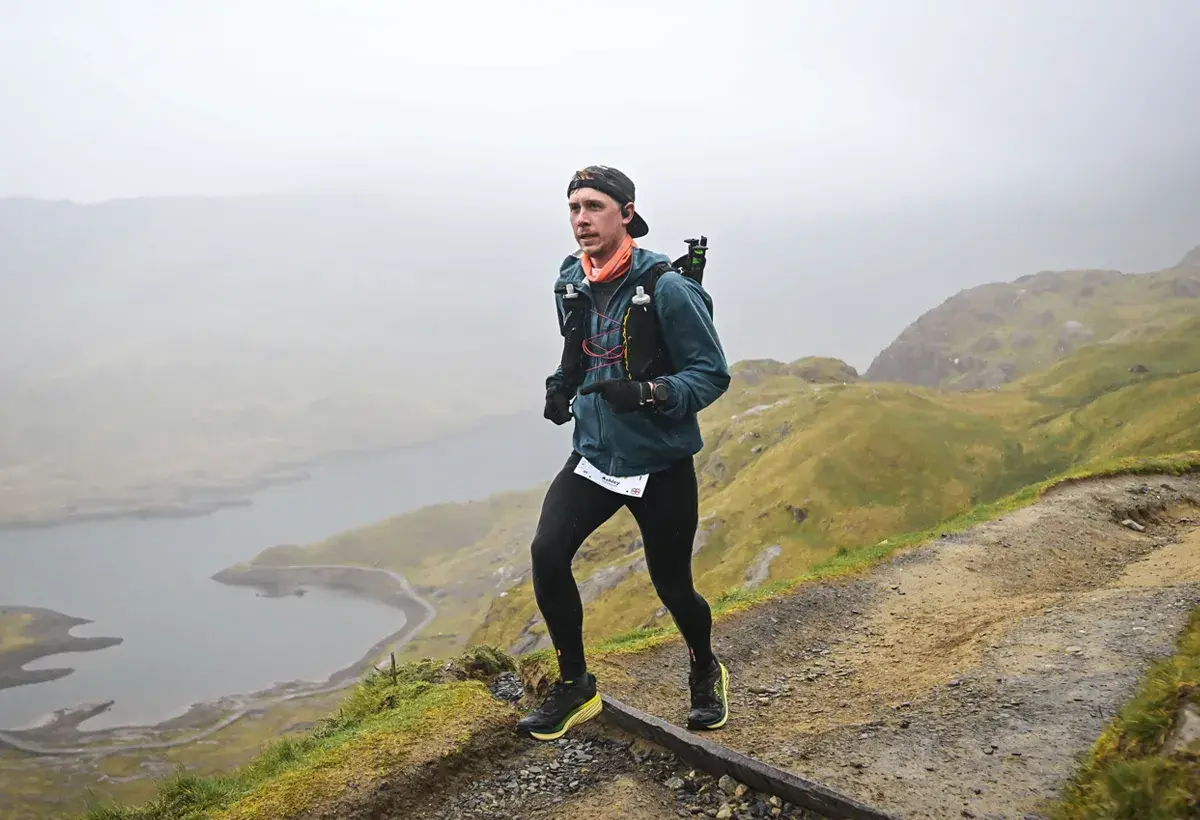
Firstly, let me set the record straight, this isn’t a race report about triumph. My first attempt at the UTS (Ultra-Trail Snowdonia) 100K ended with a DNF at aid station 6 in Beddgelert, just over 83km into the race. The terrain was highly technical, the weather got progressively worse with strong winds, low visibility clag and sideways rain, and miles of knee-high, man-eating bogs ultimately zapped the energy out of my already tired legs.
But failure is often our greatest teacher, and there is a lot to unpack from this brutal, beautiful beast of a race.
Race Overview & Stats
- Date: 16th May 2026
- Start Time: 5:30am
- Start Location: Llanberis, Wales
- Distance: 106km
- Elevation Gain: 5,400m+
- Cut-off Time: 32 hours 30 mins
The Calm Before the Storm
After months of training and preparation, arguably one of the biggest weekends in the UK ultra-running calendar had finally arrived. Ultra-Trail Snowdonia is often referred to as one of the pinnacles of UK mountain ultras. It attracts elite runners from all over the world, featuring highly technical terrain, extreme alpine-scale elevation, and breathtaking views of Snowdonia, although I saw very little of those views thanks to the weather!
The alarm was set for 3:45am. Thankfully we were staying in a cottage just 15 minutes outside of Llanberis, which kept travel time on the morning to a minimum. Despite this convenience, I still didn’t sleep great, mainly due to the usual pre-race nerves.
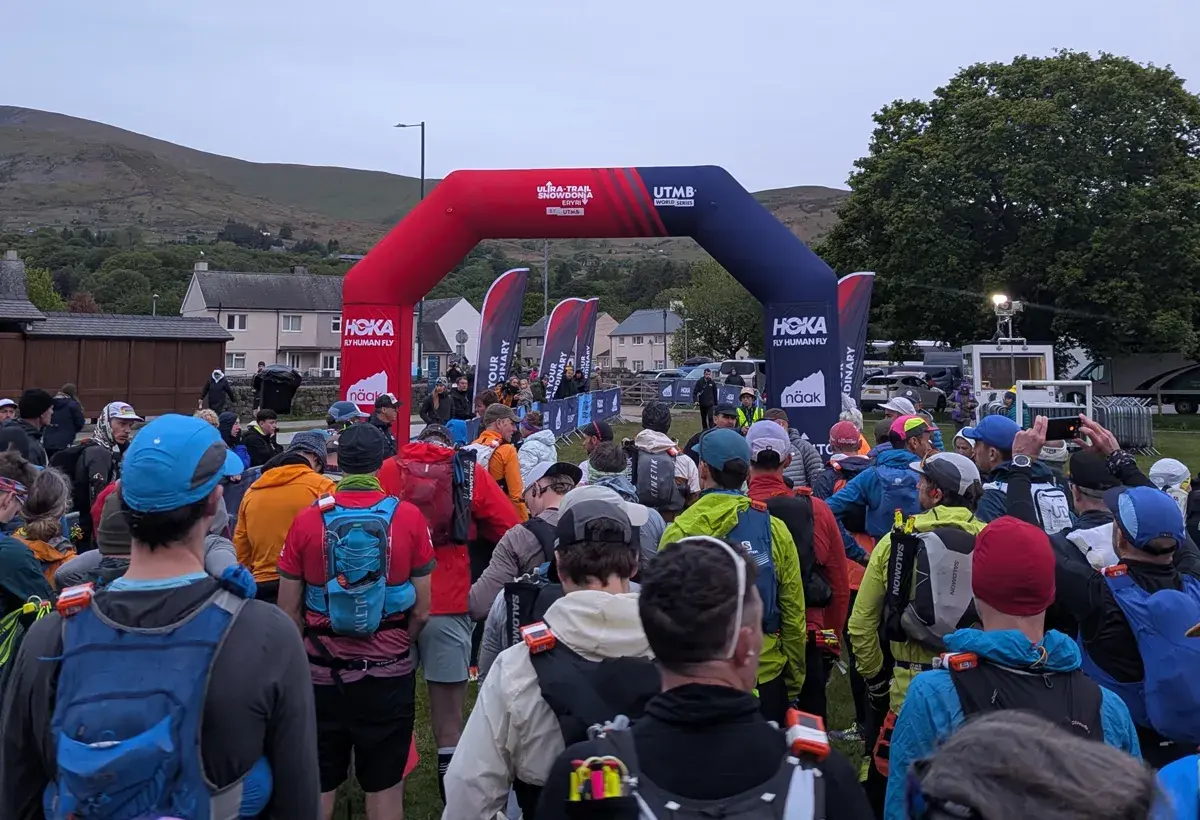
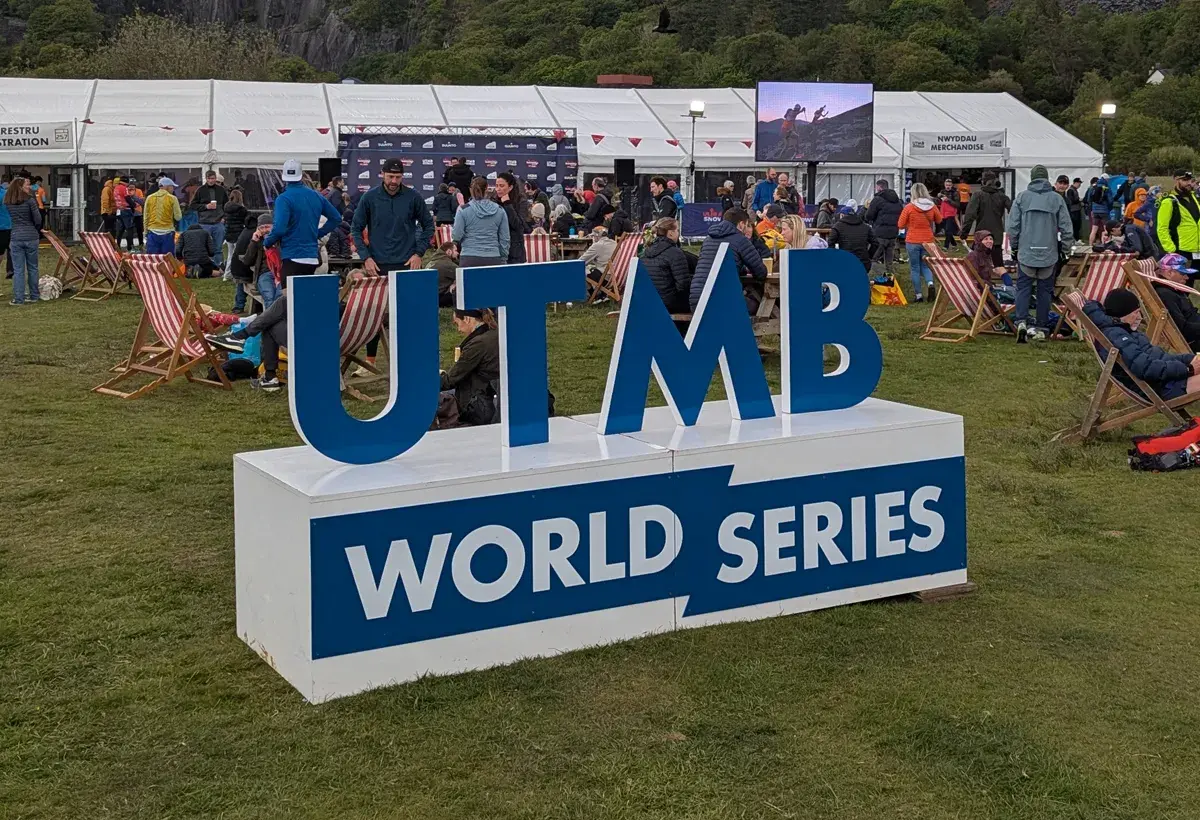
Arriving at the race village, the atmosphere was electric. The space quickly filled with a mix of excited and anxious runners preparing to tackle the 100k distance. The weather at the start line wasn’t terrible, it was grey and cool. However, that would all change later in the day as we climbed higher into the mountains.
A Fast Start
At 5:30am, we were off. Taking the Llanberis path up to Bwlch Glas provided a very nice, gradual climb of around 900m over 7km, gently easing us into the race. As we gained altitude, the weather began to deteriorate. It was nothing too extreme at this point, but as the temperature dropped and the rain began to fall, I made the call to put on my rain jacket and gloves.
The first descent was incredible. It wasn’t overly technical, which allowed for lots of fast-paced rock hopping, always a fun way to eat up the miles. We passed a few early morning hikers, but the trails weren't overly congested. This allowed me to pick up the pace and reach the first aid station at Gwastadannas Farm well ahead of my anticipated arrival time.
I chose not to hang around. Following a quick water top-up and a toilet break, I began the climb up Moel Siabod. This is where we got our first taste of the Welsh bogs. Goodbye, dry feet. In comparison to what was waiting for us later, these bogs weren't too bad. Most could be hopped over or skirted around, and the unavoidable ones were only ankle-deep.
At the summit, it was poles away and time for the first bit of technical scrambling. The clag had rolled in heavy, and visibility dropped considerably. The markers became much harder to spot, and the wet, technical rock faces turned slippery, forcing a much slower, careful pace.
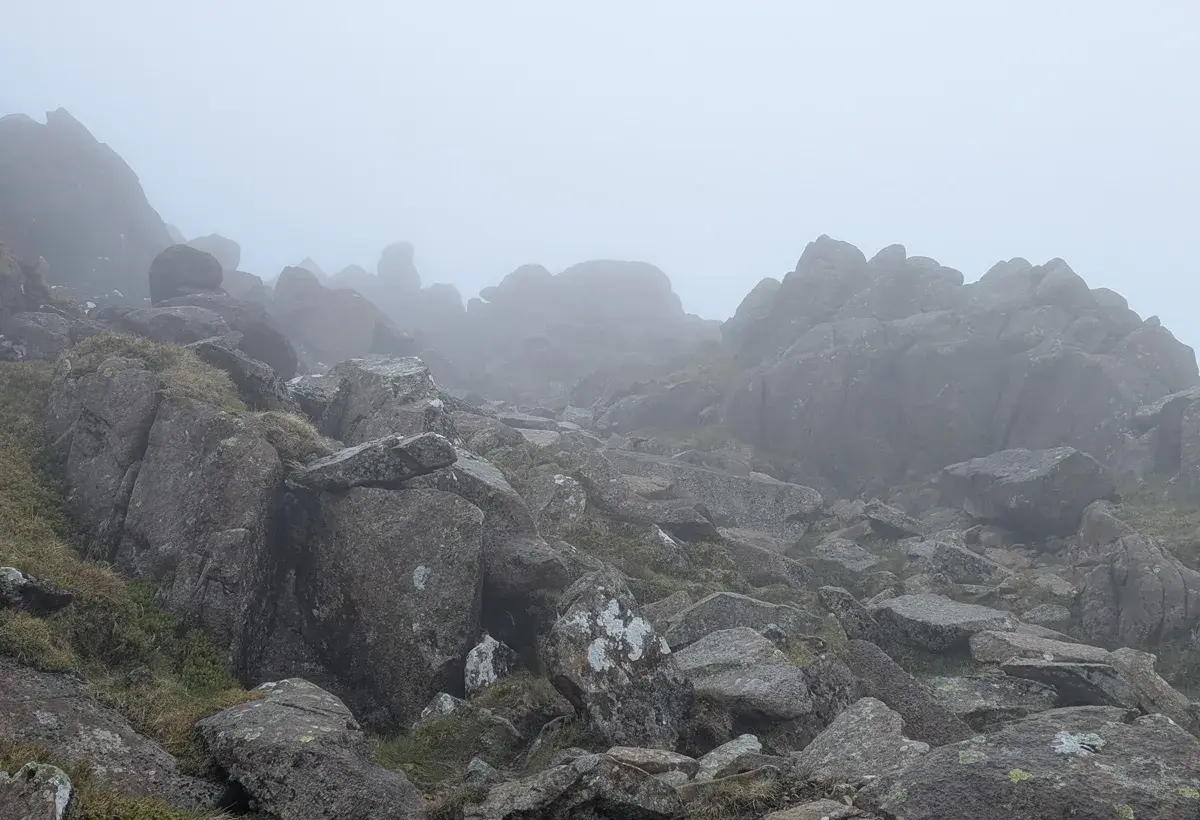
Despite the intense technical terrain, I made it into the second aid station at Dolwyddelan ahead of schedule again. This was the first aid station that allowed crew assistance, but I had arrived 15 to 20 minutes before my support. Not wanting to waste time, I topped up my water, grabbed a few snacks, and decided I had enough fuel to push through to the next crewed checkpoint at Blaenau Ffestiniog.
The Turning Point
The next section is where the difficulty really ramped up. It wasn't the elevation, there was only around 500m of gain, but the Welsh bogs became far more gruelling, deeper and completely unavoidable. My pace slowed as the terrain began to take its toll, slowly draining my energy reserves. The weather took a nasty turn too, wind speeds picked up, visibility plummeted and the dreaded sideways rain began.
Arriving at aid station 3 in Blaenau Ffestiniog, I was soaked to the bone and shivering. Thankfully, my support crew (A.K.A mum and dad) were waiting outside, which provided a massive morale boost. I restocked my supplies and ate some warm soup to heat myself up. Not wanting to get too comfortable, I headed right back out into the rain to tackle the ascent up Moelwyn Mawr.
This is where things started to go downhill.
My legs were tiring, though I still felt mentally confident. But as we neared the summit, visibility dropped to around 12 feet. Finding the markers became a challenge, and the runner ahead of me looked like a faint, terrifying shadow straight out of Silent Hill. The wind howled, significantly knocking my confidence on the rocky sections near the peak.
Then came the descent. It wasn’t technical, just a steep ankle-breaker made incredibly slippery by the wet and windy conditions. I took a nasty fall, bending one of my poles and leaving my lower back and shoulder banged up. My race pack acted as a cushion and absorbed the brunt of the impact, saving me from a worse injury, but it still left me shaken.
I eventually made it to the 4th aid station at Croesor. Since our drop bags were here, I swapped my wet long-sleeve top for a thicker, dry one, ate some chilli and drank a coffee to try and mentally reset. While I sat there nursing my aching back, a younger lad came in limping and went straight to the medics, likely a victim of the same Moelwyn Mawr descent. Whoever you are, thank you. Seeing you was exactly what I needed to stop feeling sorry for myself. My shoulder hurt, my back ached and my pole was bent, but my legs and feet still worked. I abandoned all thoughts of pace and anticipated arrival times. My focus shifted purely to survival. Even if I had to death-march it, I was going to keep moving.
The Abyss
I set off on the 500m ascent up Cnicht. It was steep, but the true nightmare began after the summit, on the stretch towards Gwastadanas.
This was by far the boggiest section of the course, featuring what felt like endless miles of knee-deep, freezing mud. I was completely alone in the clag, I couldn't see any runners ahead or behind. Occasionally, I struggled to find the markers but this is exactly why having the GPX file downloaded is mandatory!
I hit a very dark place here. It was a combination of the earlier fall playing on my mind, the abysmal weather and the sheer physical toll of dragging myself out of knee-deep bogs. I tried to avoid them, but they were mostly inescapable, obliterating whatever energy I had left. With no visibility, I had no way of gauging my surroundings or progress other than by looking at the numbers on my watch. It felt like I was trapped in an abyss of freezing water, cold rain and howling wind with no end in sight. My pace slowed to an absolute crawl.
Towards the end of this stretch, three runners came up behind me. Seeing other human beings snapped me out of the darkness. It reminded me that I wasn’t alone, and that this level of brutal testing is exactly why we sign up for these races.
The DNF
As I neared the 5th aid station back at Gwastadanas Farm, the heavens opened up again. Seeing the white marquee appear through the gloom was like spotting a heavenly beacon. Inside, several runners were looking worse for wear.
I grabbed a coffee and some hot food to warm up while listening to the chatter around me. It was clear we weren't going to reach Beddgelert before nightfall, which meant tackling the notorious Moel Hebog and the Nantlle Ridge in the dark and in terrible weather. This prospect proved too much for some, and I watched a number of runners officially retire. If I'm honest, the brain worm had wiggled its way into my head too.
Knowing I needed to remove myself from the negative environment, I grabbed my headtorch, plugged my dead phone into my power bank, and got ready to leave. A wonderful UTMB volunteer noticed me packing up and gave me exactly the pep talk I needed.
"Look, it’s just 14km to the next aid station, then another 14km after that, then you’re on the home stretch with less than 10k to the finish. You’ve got this!"
I have to say, every single volunteer I encountered on the course was absolutely awesome.
Reenergised, I headed out. After a brief boggy patch, the trail became highly runnable, and my confidence surged. But then came a small, non-technical climb just before Beddgelert. For some reason, it absolutely demolished me. The energy and confidence I had found an hour prior completely vanished, and I fell right back into a dark headspace.
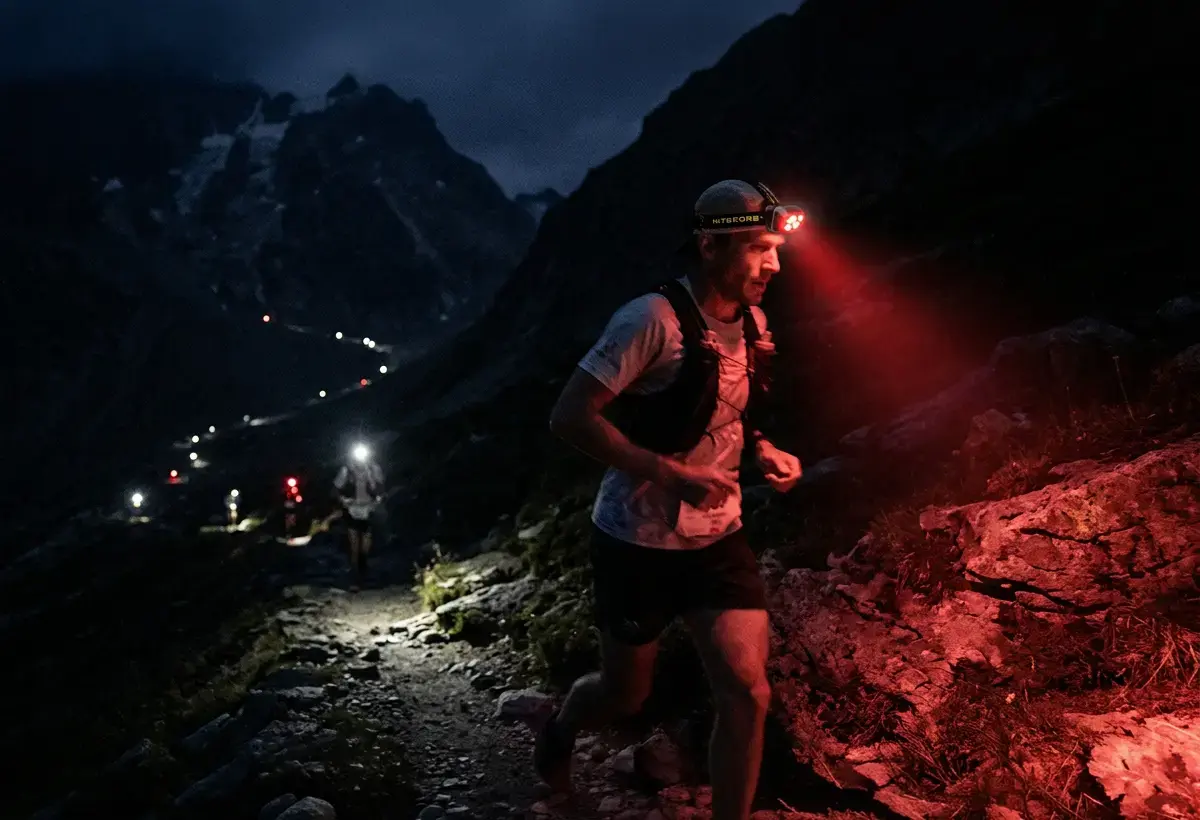
Night had fully descended by the time I entered aid station 6 in Beddgelert. Looking up into the pitch-black sky, I could see a trail of headlamps floating up towards Moel Hebog. This was the last crewed checkpoint before the finish, and the first time I’d seen my support since my fall 30km earlier.
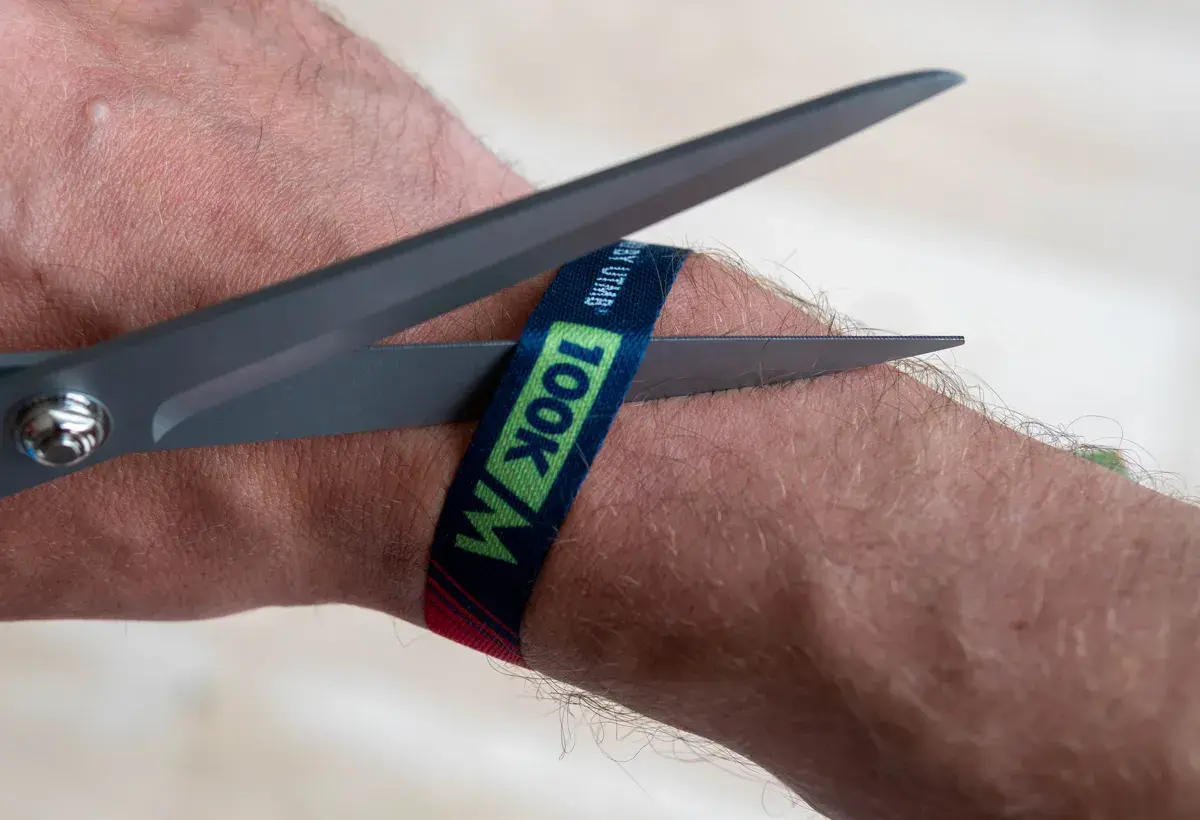
A couple of runners sitting near me overheard me debating whether to retire. They kindly asked if I wanted to join them on the final stretch. I love the camaraderie in ultra-running, thank you to those runners but in hindsight, my mind was already made up. I simply did not have it in me to take on Moel Hebog and the Nantlle Ridge in the dark with heavy, tired legs and in such poor weather conditions.
My first attempt at the UTS 100K ended with a DNF at Beddgelert after 83km and 4,324m of elevation gain.
Lessons Learned
I could make plenty of excuses, it wasn’t my day, the weather was horrific, I took a bad fall, my gear was damaged. But ultimately, it boils down to the fact that I just wasn't prepared enough.
I am incredibly thankful for the experience and have taken away some vital lessons to build upon in my training.
- There is no substitute for technical terrain: You can run all the hills and do all the strength work in the world, but to move quickly and confidently over technical ground, you have to actually train on technical ground.
- Stop avoiding bad weather: It is so easy to say, "I’ll wait until it brightens up this afternoon," or "I’ll go for a run tomorrow instead" but the reality is, the more you train in horrific weather, the more comfortable you will be when race day throws it at you.
I fell short in both these areas, and it’s on me to train harder. I truly believe that failure is a blessing. It highlights our shortcomings and forces us to evolve and adjust. This isn’t the end of my UTS journey, I'm proud of the 83km I achieved and the fight I put up, and I guarantee I will be back to finish what I started!
What Worked Well
Despite the DNF, several things went perfectly on the day:
- Fueling Strategy: My nutrition was spot on. At no point during the 83km did I feel like I was bonking. I used a combination of tried-and-tested gels, solid food and the Endure Carb mix from Awesome Supplements. I highly recommend it and won't be changing this strategy anytime soon.
- Foot Care & Shoes: My feet survived the bogs remarkably well. I wore the Topo Vista trail shoes and walked away with absolutely no blisters or foot injuries, which is a massive win given the conditions.
Is UTS the Hardest 100k Ultra in the UK?
If you are looking for a race that will push you to your absolute limits, UTS is undoubtedly a top contender. But do the numbers back up its reputation as one of the hardest UK 100k ultras?
When you look at the statistics, the terrain and weather speak for themselves. In the 2026 edition of the event, out of 365 starters for the UTS 100K, 156 runners Did Not Finish (DNF). That is a highly significant drop-out rate of around 42% for a 100km race. By comparison, the brutal UTS 100 mile equivalent saw a staggering 60% DNF rate that same year.
When you stack UTS up against other notoriously tough UK ultras, like the winter coastal sufferfest of the Arc of Attrition or the relentless undulations of the Lakeland 100, it easily holds its own. The combination of alpine-scale elevation gain (5400m+ packed into 106km), the technical scrambling (especially during the later sections on tired legs) and the soul-sucking Welsh bogs make it an entirely different beast. It requires a specific type of mountain resilience that road miles simply cannot buy you. If you want to test yourself against the hardest terrain the UK has to offer, UTS is exactly where you need to be.